Home chevron_right Products chevron_right Bitumen Oxidation chevron_right Air Blowing Oxidized Bitumen Plant
Air Blowing Oxidized Bitumen Plant
BITUMEN OXIDATION

Air Blowing Oxidized Bitumen Plant

A robust, continuous air‑blowing system designed to convert penetration‑grade bitumen into high‑quality oxidized (blown) bitumen with precise control over softening point and penetration. Suitable for production of grades such as 85/25, 90/15, 95/25, 105/35, 115/15 and other customized grades for roofing, waterproofing, pipe coating, joint filling, industrial coatings and electrical applications. Complies with ASTM D312, ASTM D449, and IS 702.

verified ISO 9001:2015 air Controlled Oxidation history 20+ Year Lifespan public Exported to 25 Countries

CAPACITY

2–15 TPH

SOFTENING POINT

75–150°C

POWER

20–75 kW

support_agent Need a custom oxidation profile? Talk to our engineers →
Overview
Technical Specifications
Grades & Applications
Features & Benefits
FAQs

Precision Oxidized Bitumen Production

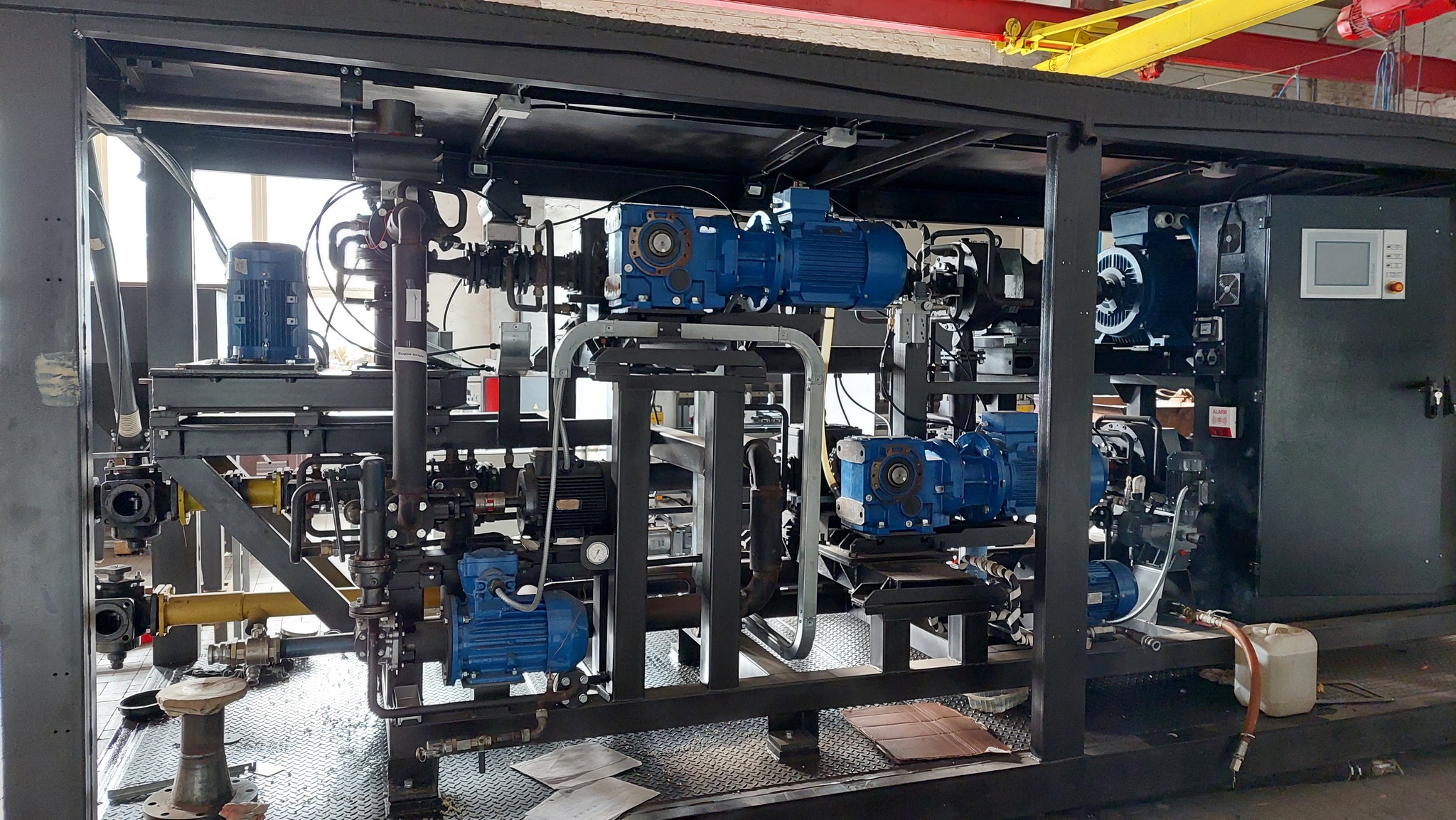
The Atlas Air Blowing Oxidized Bitumen Plant uses a controlled oxidation process to convert straight‑run penetration‑grade bitumen into high‑quality oxidized (blown) bitumen. The system injects a precisely metered flow of heated air into the bitumen at elevated temperatures, creating a chemical reaction that increases the softening point, reduces penetration, and improves thermal stability. The result is a harder, more heat‑resistant industrial bitumen suitable for a wide range of applications.

flowchart Basic Process Flow

Bitumen Feed Tank → Feed Pump → Air‑Blowing Reactor → Mist Catcher → Condenser/Scrubber → Vent System → Oxidized Bitumen Storage Tank → Packing/Dispatch

settings Operating Principle

  • Suitable penetration‑grade bitumen is charged to the reactor.
  • The bitumen is heated to the required processing temperature (typically 240–280°C).
  • Controlled air is introduced through an air ring/nozzle system near the reactor bottom.
  • Air reacts with the hot bitumen, increasing its oxidation level.
  • The product becomes harder, with higher softening point and lower penetration.
  • The desired grade is achieved by controlling temperature, airflow, residence time and feedstock properties.
  • Off‑gases pass through mist separation and gas‑treatment equipment.
  • Finished oxidized bitumen is transferred to storage or packing.

inventory Main Equipment

Equipment Basic Function
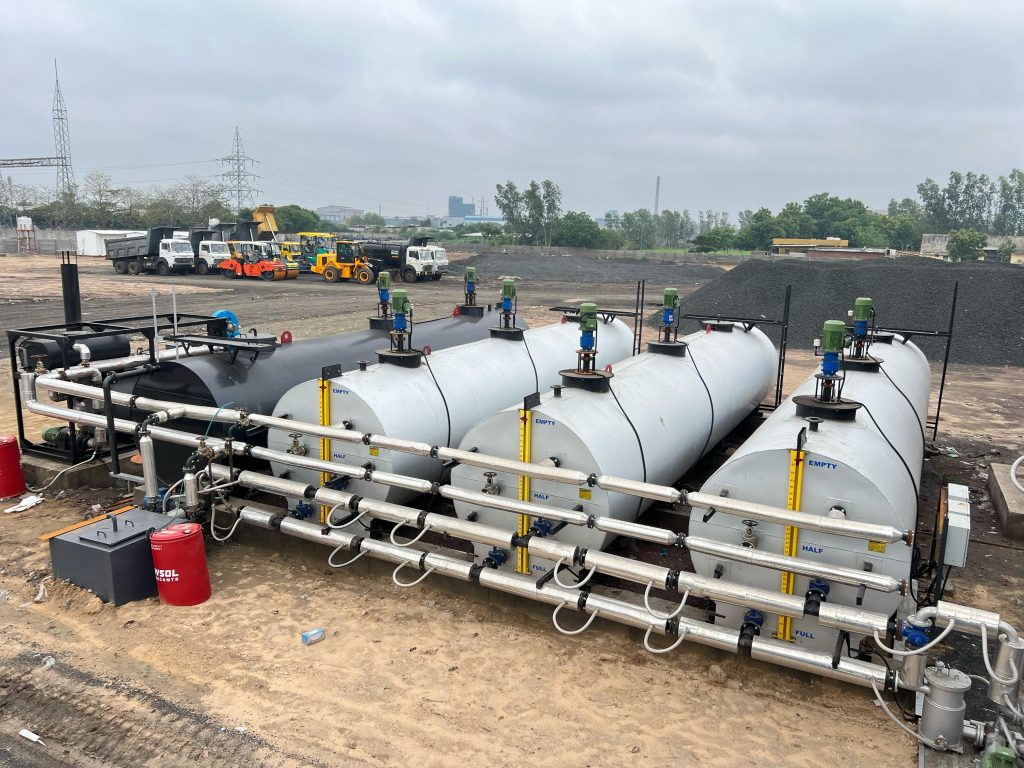
Bitumen Feed/Storage Tank Stores and maintains feed bitumen at required temperature
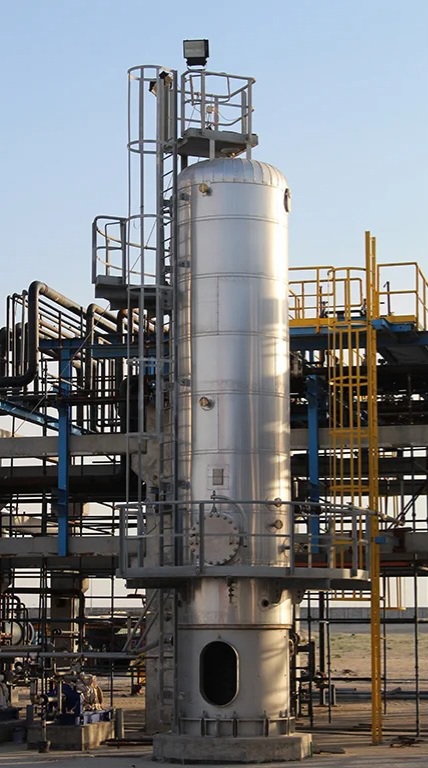
Air‑Blowing Reactor Main oxidation vessel where hot air is dispersed through bitumen
Air Blower/Compressor Supplies controlled oxidation air
Air Ring / Air Nozzles Distributes air uniformly inside the reactor
Heating System Maintains required bitumen processing temperature
Mist Catcher Removes entrained bitumen droplets from outgoing gases
Condenser Condenses recoverable vapours
Scrubber Treats/cleans process gases before discharge
Vent Blower Maintains controlled gas flow and reactor draft
Oxidized Bitumen Storage Tank Stores finished product
Pumps & Valves Transfer feed and finished bitumen
PLC/Control Panel Controls temperature, airflow, level, pressure and process operation

Important: Actual reactor temperature, air rate, reactor volume, residence time and grade production rate must be designed from the feedstock properties and target specification. A plant designed for 85/25 should not simply use the same operating conditions as a plant producing 115/15.

check_circle Key Benefits

  • check_circle Precise control over softening point (75–150°C) and penetration to meet ASTM D312, D449, and IS 702.
  • check_circle Continuous oxidation process for high‑volume production.
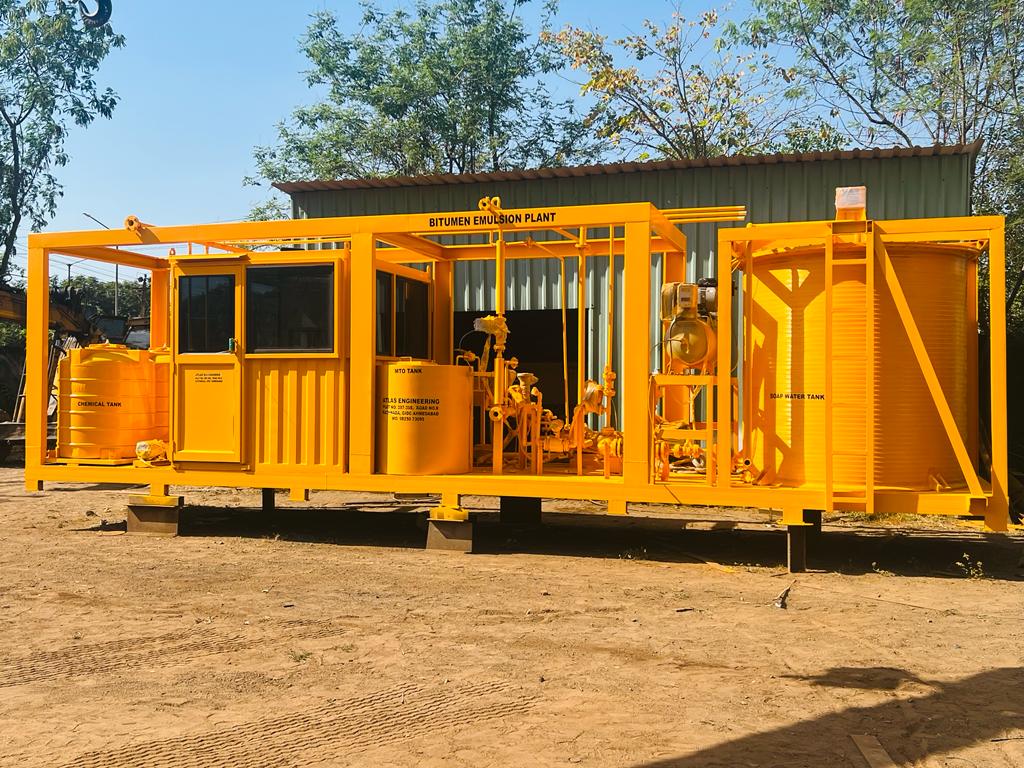
  • check_circle Modular skid design — fits within 30 x 18 ft area.
  • check_circle Optional catalytic injection for enhanced efficiency.

inventory_2 Quick Facts

BrandAtlas Engineering
OriginAhmedabad, India
Warranty18 Months
Delivery8–10 Weeks
ComplianceASTM D312, D449, IS 702
Grades85/25, 90/15, 95/25, 105/35, 115/15 + custom
SpecificationDetails
Capacity2 TPH / 5 TPH / 10 TPH / 15 TPH
Oxidation ProcessContinuous air blowing (catalytic optional)
Softening Point Range75°C – 150°C (adjustable)
Penetration (25°C)5–40 dmm (as per ASTM D5)
Operating Temperature240°C – 280°C (thermic fluid heated)
Air Flow ControlPLC‑regulated with flow meter
Power Requirement20–75 kW (model dependent)
Storage/Reaction Tanks5,000–30,000 Litres
Control SystemPLC + HMI Touchscreen
ComplianceASTM D312, ASTM D449, IS 702
FootprintApprox. 30 ft x 18 ft
Net Weight3,500–8,500 kg (model dependent)

Common Oxidized Bitumen Grades

The designation generally indicates softening point / penetration. For example, 85/25 refers approximately to a softening‑point level around 85°C and penetration around 25 dmm, subject to the applicable standard/specification.

Grade Typical Characteristics Main Applications
75/25 Softer oxidized grade Waterproofing, mastics, roofing compounds
85/25 Medium‑hard, good heat stability Roofing felt, waterproofing membranes, joint fillers, pipe coatings
85/40 More flexible Roofing membranes, waterproofing and movement‑related applications
90/15 Harder, higher heat resistance Pipe coating, joint filling, roofing, industrial coatings
90/40 Medium‑hard/flexible Roofing membranes and waterproofing
95/25 High softening point Hot‑climate roofing, waterproofing and industrial applications
105/35 High‑temperature industrial grade Industrial roofing, mastics and heavy‑duty coatings
115/15 Very hard, high‑temperature resistant Industrial roofing, pipe/cable applications, electrical insulation and specialized coatings
150/5 Extremely hard specialty grade Special industrial coatings and high‑temperature applications

Industry references commonly list grades such as 85/25, 90/15 and 115/15, while the wider oxidized‑bitumen family includes grades such as 75/30, 85/40, 95/25, 105/35 and 115/15.

Major Applications

🏠 Roofing & Waterproofing
  • Roofing felt
  • Waterproofing membranes
  • Built‑up roofing
  • Roof coatings
  • Waterproofing compounds

ASTM D312/D312M covers asphalt used in built‑up roofing, modified‑bitumen systems, vapor retarders and insulation‑board adhesion.

🔧 Pipe Coating
  • Anti‑corrosion coating for underground steel pipelines
  • Oil & gas pipeline protection
  • Protective industrial coatings
🧰 Joint Filling & Sealants
  • Expansion/joint‑filling compounds
  • Crack sealing
  • Construction sealants
  • Pavement repair compounds
⚙️ Industrial Applications
  • Bituminous paints
  • Mastics
  • Adhesives
  • Sound‑damping materials
  • Rubber/plastic processing
  • Electrical cable and insulation applications
air

Controlled Air Blowing

Precisely metered air flow with adjustable temperature profiles for consistent oxidation and grade control across a wide softening‑point range.

thermostat

Advanced Thermal Management

Thermic fluid heating system with multi‑zone temperature control up to 280°C for optimal oxidation kinetics.

memory

Atlas Direct IoT Ready

Optional remote monitoring for temperature, air flow rate, and product quality tracking.

verified

Consistent Quality

Automated controls ensure uniform softening point and penetration batch after batch.

move_down

Skid‑Mounted Design

Modular construction for quick installation, relocation, and minimal site preparation.

support_agent

24/7 Technical Support

On‑site commissioning, process optimization, and spare parts support across 25 countries.

What grades of oxidized bitumen can this plant produce?expand_more

The plant can produce grades 75/25, 85/25, 85/40, 90/15, 90/40, 95/25, 105/35, 115/15 and 150/5 as per ASTM D312, with custom grades available upon request.

What is the typical oxidation cycle time?expand_more

Oxidation cycle time varies from 4 to 12 hours depending on the desired softening point and grade, with continuous operation possible for high‑volume production.

Can the plant use catalytic additives to enhance oxidation?expand_more

Yes, the system is designed with optional catalytic injection points for use with metal‑based catalysts (e.g., FeCl₃) to accelerate the oxidation process and improve efficiency.

What is the typical delivery and installation time?expand_more

Standard units ship in 8–10 weeks from order confirmation, with on‑site commissioning and process optimization support included.

What standards does the plant comply with?expand_more

The plant is designed to produce oxidized bitumen meeting ASTM D312, ASTM D449, and IS 702 specifications.

Related Products

Need oxidized bitumen for your application?

Get a tailored quote for your capacity, grade, and oxidation requirements.

Request a Quote arrow_forward
chat
payments Request Quote
headset_mic Live Chat